

As most of you, I’ve been watching with a heavy heart as the nation deals with yet another mass shooting, this time at Marjory Stoneman Douglas High School in Parkland, Florida.
Since the tragedy, Facebook has lit up with fiery demands for gun control and in-your-face defense of the Second Amendment. Both sides believe they have a simple answer, and neither do. For all their resolve, their absolutists rhetoric – blaming guns or blaming crazy people – are not only impractical but disregard much history and research. The path forward is more complex.
“It’s the fault of our broken culture” is one oft repeated criticism. It’s a catchall assessment for a lack of prayer in schools, the rise of science, our obsession with Hollywood, eroding societal morals, the ills of social media, permissive parenting, changing sexual norms, etc.
But when we say the problem is “culture,” can anyone making that charge honestly exclude themselves? Are those blaming culture raising their hand and saying, “I’m part of the problem?” Are they saying:
“When I choose ‘edgy’ television shows and movies that glorify crime, murder, infidelity, and savage behavior that exhibits the darkest demons of humanity for the sake of entertainment, I’m contributing to societal breakdown. I simply don’t value life.
When I refuse to help the poor; when I can’t be bothered to vote; when I flip-off other drivers on the road; when I lie, steal, and cheat; and when all that sets a terrible example for others – especially children – then go ahead and blame me. I’m a bad influence.
I have a right to do as I please, and will fight anyone who gets in my way. People are idiots if they don’t think like me. I know I’m right, so I quickly and easily excuse things that trouble or challenge me. I’m a lousy neighbor.
I accept personal responsibility for my role in the decline of our culture.”
Is that what’s being confessed? No. I hear only blame: “broken culture is someone else’s fault.” That entrenched self-righteousness may have been vindicating in kindergarten, but now school kids are being shot … on an alarmingly regular basis. Blame isn’t a solution.
The pro-gun lobby has had its chance to act … to proactively find solutions that prove their assertion that gun violence is “a people problem not a gun problem.” Other than in acts of self-defense, people who shoot others are crazy. And there is no way to know how often existing gun laws stop or inhibit shootings. We only hear about the failure of those laws to do so.
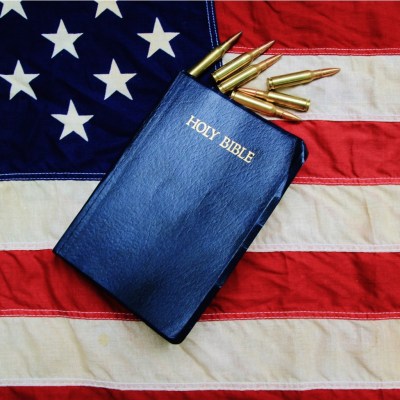 I’m a gun owner and I’m in favor of more effective laws and restrictions that make it harder to purchase and sell guns, and to hold owners and sellers more accountable. On that score I part ways with extremists who fear any and all gun laws will inevitably lead to “the government taking away our guns.”
That overarching fear has kept the National Rifle Association in a defensive posture for decades, rather than demonstrating the efficacy of its position. And, to be fair, they haven’t had to because they chose a different strategy. When the pro-gun lobby doesn’t advocate for (or decry the repeal of) expanded mental health services, or help fund school programs to identity the warning signs of at-risk students; and then pays off politicians to kill common-sense legislation (such as universal background checks, which has broad support), continue allowing people on the Federal No-Fly and Terror Watch Lists to purchase guns, cripple the tracking of guns through databases, prevent the study of gun violence, and to oppose funding the ATF, it speaks loudly and unflinchingly to an agenda that is pro-gun, not pro-people.
And that is the point of intersection for Christians. Our mission is entirely pro-people. Christians need to be in the forefront of efforts to research and enact solutions to stop gun violence. When there is no daylight between Christians and the NRA, critics rightly accuse us of abandoning the core tenets of our faith. Many shooters are the outcasts, the loners, and the deeply troubled; who the Bible describes as “the least of these” (Matthew 25:35-40). We can’t reach them all, but it’s a growing mission field right here at home.
“Crazy people” matter because we’re Christians first. When we decide we’re Americans first, or patriots first, or that the sanctity of the U.S. Constitution is preeminent in securing our God-given rights, we have allowed secular schemes to capsize our biblical beliefs. We fight misguided battles for distorted reasons and then angrily dismiss those who say we’re charlatans and hypocrites. We buy into the enemy’s lies when we believe the power of Almighty God is dependent on anything other than His own promises.
The right to “bear arms” has nothing to do with being an ambassador for Christ, and how we approach the topic with non-believers has everything to do with whether they see us as pro-gun or pro-God.
Am I saying Christians shouldn’t own guns or don’t have a right to defend themselves? Of course not! I’m saying that the veracity of our religious convictions are displayed by the organizations and people with whom we publicly align and associate (1 Cor. 15:33, Psalm 26:4-5). If a person wishes to be a vocal white supremacist while publicly professing Christian faith – one cancels out the other. We end up on the wrong side of history when we read the Bible with one eye closed or try to justify worldly pursuits with Scriptural mandates.
The culture of blame makes us comfortable with our choices. Idolatry, as defined by one scholar, are those things that “challenge God’s sovereignty and attempt to offer an alternate explanation to the issues of life.”
People kill people, and God loves life. That doesn’t resolve the gun debate, but it gives Christians a very clear starting point.
 Informing the Faithful